
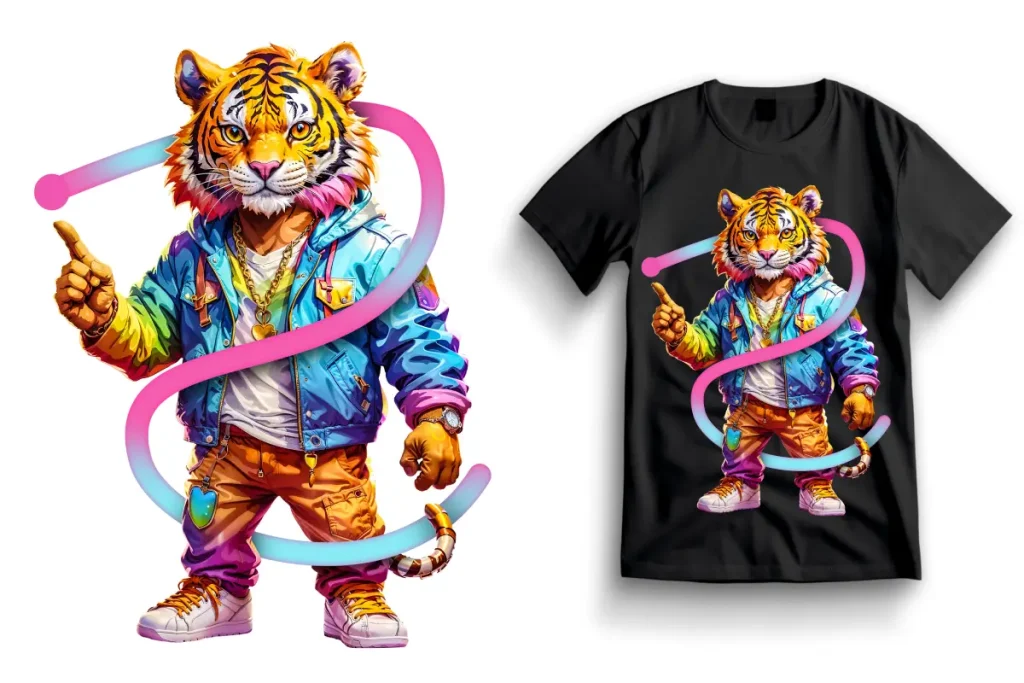
The garment decoration landscape is shifting rapidly, forcing print shop owners, independent designers, and clothing brand founders to rethink their production strategies. Staying profitable means discovering reliable methods that deliver retail-grade quality without demanding a massive upfront investment or complex pre-treatment setups. Over the past few seasons, high-quality dtf transfers have emerged as the go-to alternative for creators who refuse to sacrifice vibrant colors or fine detail. This technology bridges the gap between intricate digital files and rugged fabric durability, providing an efficient system that works on almost any garment material available in the textile marketplace.
Demystifying the Engineering Behind the Film Matrix
Understanding why this decoration technique is outperforming legacy methods requires a look at the physical materials and chemical processes involved. The term DTF stands for Direct-to-Film, a process where digital artwork is printed directly onto a clear, specially coated polyethylene terephthalate film using advanced textile inks. Unlike traditional screen setups where every single color requires a dedicated mesh frame, this system outputs the entire color spectrum plus a thick backing of white ink in a single automated pass.
Immediately after the ink hits the film surface, a critical thermal bonding process begins. While the ink is still wet, a uniform layer of hot-melt polyurethane adhesive powder is applied across the entire sheet. The printed film then moves through a heated curing tunnel or specialized oven, melting the powder into a flexible, rubberized barrier. When a creator applies this cured film to a garment using a professional heat press, the adhesive melts once more, locking the pigments directly into the weave of the fabric and creating a permanent bond that easily survives repeated wash cycles.
Why Commercial Decorators Are Moving Away from Legacy Printing
For several decades, traditional screen printing dominated the bulk apparel space. However, screen printing becomes highly inefficient when handling colorful, photographic artwork or low-volume production runs because of the time-consuming labor required for setup and cleanup. Similarly, Direct-to-Garment printing promised to solve the color problem but introduced strict fabric compatibility rules, forcing shops to treat garments with heavy chemicals and limiting production mostly to 100 percent cotton garments.
Modern film transfer systems remove these industrial roadblocks entirely, presenting distinct production advantages that streamline the daily workflow of modern print shops:
- Universal Textile Application: You can apply these graphics to pure cotton, polyester blends, performance spandex, synthetic nylon, and even heavy canvas without changing inks or applying messy liquid pre-treatments.
- Flawless Gradient and Detail Retention: Since the printing process happens on a dimensionally stable plastic film instead of porous fabric fibers, tiny text, thin lines, and subtle color gradients retain absolute sharpness.
- Elimination of Minimum Order Quantities: Print shops can nest multiple unique designs on a single roll of film, making it just as cost-effective to produce one custom jacket as it is to run a production batch of one thousand pieces.
- Stretchy and Lightweight Hand Feel: The ultra-fine polyurethane adhesive layer yields a finished graphic that bends, stretches, and breathes naturally with the garment rather than feeling like a stiff plastic board.
Overcoming Regional Supply Challenges and Production Delays
Because speed to market is everything in the fashion and promotional merchandise industries, apparel creators frequently search for dtf transfers near me to avoid long shipping timelines, custom clearance issues, or unexpected delivery delays. Having a local print partner can save a business when an unexpected corporate order arrives or a viral social media trend demands immediate inventory replenishment.
However, print shop managers must understand that not all local suppliers operate with the same quality standards. A premium transfer requires a perfect chemical balance between industrial printheads, premium ink stability, and moisture-controlled adhesive powders. If a local shop uses cheap, modified desktop printers or cuts corners on curing times, the transfers might split under pressure, fail to peel smoothly, or wash away after a single trip through a domestic laundry machine. Partnering with a reliable regional specialist who uses commercial wide-format equipment is vital to maintaining business credibility.
The Industrial Powerhouse: Securing the Best DTF Transfer at Houston
Texas has established itself as a primary manufacturing and distribution epicenter for the custom apparel market, with hundreds of local businesses requiring heavy-duty performance and rapid turnaround times. Finding the absolute best dtf transfer at Houston requires identifying a production facility that pairs commercial-grade, multi-head printers with deep technical expertise in textile science. The hot, humid climate of the Gulf Coast means that both the raw materials and the finished prints must withstand demanding environmental conditions.
Sourcing your production films from a high-tier regional specialist ensures that your graphics are printed in climate-controlled environments with precise humidity regulation. This strict environmental control prevents the water-based inks from drying out prematurely in the printhead and ensures the adhesive powder bonds evenly across the artwork. When these premium sheets arrive at your workshop, they perform flawlessly under the heat press heat platen, keeping your scrap rates near zero and protecting your blank garment investments.
Scaling Your Clothing Line with a Reliable Houston DTF Transfer
Integrating a dedicated Houston dtf transfer service into your daily production pipeline gives your clothing brand an immense competitive edge. Rather than tying up thousands of dollars of working capital in pre-printed warehouse inventory, boutique owners and apparel decorators can utilize a nimble, just-in-time fulfillment strategy. You can showcase a wide array of designs online, collect customer orders, and print the exact quantity needed on demand.
To maximize the longevity and visual impact of these regional transfers, production teams should follow a standardized application procedure. Always pre-press your blank t-shirts or hoodies for roughly five seconds to drive out natural atmospheric moisture and flatten out fabric wrinkles. Ensure your heat press machine delivers firm, uniform pressure across the entire surface area, and use a reliable infrared thermometer to verify that your heating element matches the supplier’s recommended parameters. These quick quality control measures ensure a deep molecular bond that keeps your garments looking brand new for years.
Frequently Asked Questions
How many wash cycles can a standard commercial film transfer endure before fading?
When produced using industrial-grade inks and premium polyurethane powders, these transfers are rated to withstand more than 50 standard machine washings. To preserve the color vibrancy and prevent friction damage over time, it is best to wash the decorated garments inside out using cold water and low-temperature drying cycles.
What type of equipment is necessary to apply these transfers to blank apparel?
A professional heat press machine that can apply reliable, heavy pressure and maintain a consistent temperature between 285 and 320 degrees Fahrenheit is highly recommended. Standard household irons cannot distribute heat or pressure evenly enough, which often leads to poor adhesive bonding and premature print peeling.
Which digital file setups deliver the cleanest print results for large graphics?
For the sharpest possible print output, creators should submit high-resolution vector artwork in PDF, EPS, or AI formats. If you are working with raster files like PNG or PSD, ensure the graphics feature a fully transparent background and possess a minimum resolution of 300 DPI at the exact physical print dimensions required.
Is it possible to apply these transfers to sublimated sportswear without dye migration?
Yes, but you must use the appropriate materials. Standard transfers might suffer from dye migration, where the polyester fabric dyes bleed into the white ink layer. To counter this, print shops can use specialized anti-bleed or low-bleed adhesive powders that block active polyester dyes from penetrating the printed graphic.
Succeeding in the modern custom apparel space requires utilizing reliable tools and dependable production partners. At Harwin DTF, we pride ourselves on delivering industrial-level precision, immaculate color accuracy, and rugged durability with every single print order we fulfill. Whether you are expanding a boutique clothing line or managing large-scale corporate merchandise orders, our facility provides the consistent, top-tier printing solutions your brand needs to stay ahead of the competition. Reach out to Harwin DTF today to check out our commercial options and see how we can optimize your printing workflow.